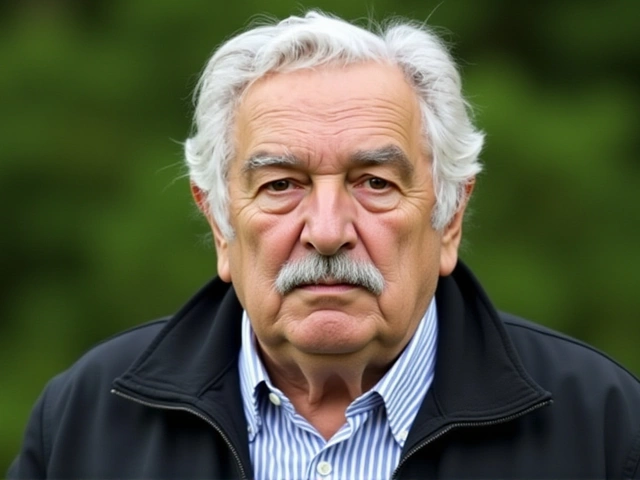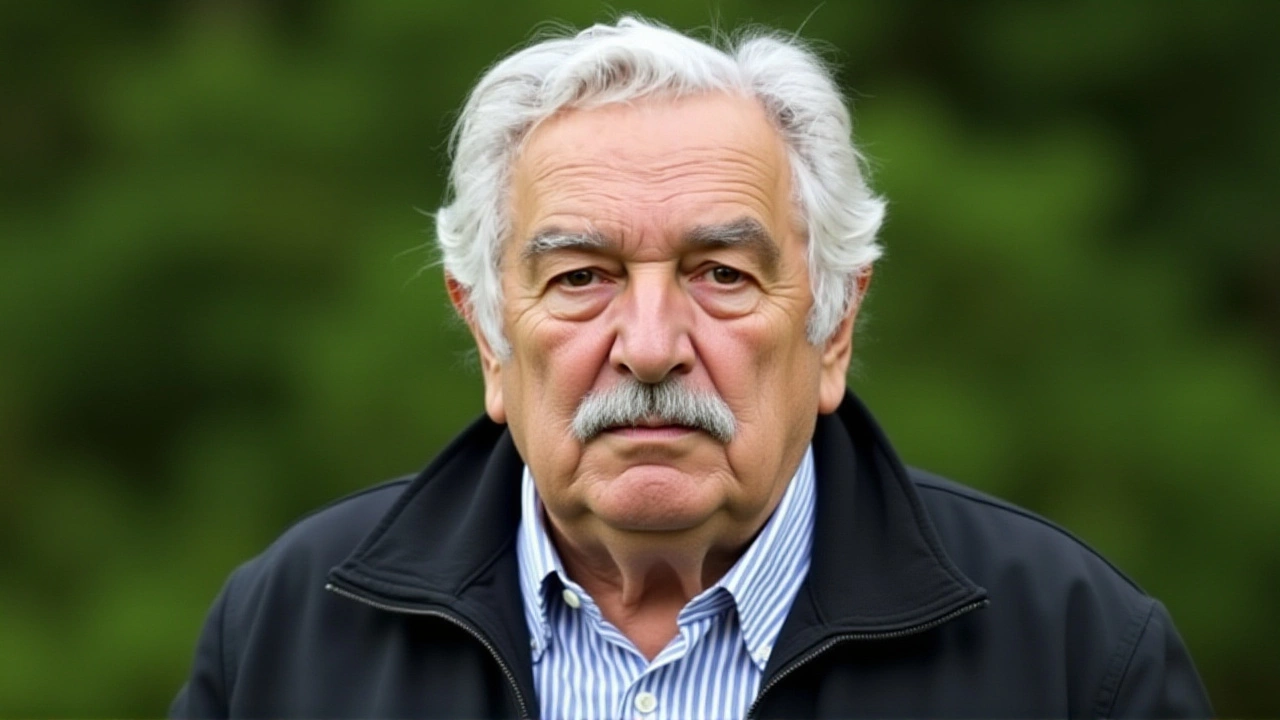
When José 'Pepe' Mujica died on May 13, 2025, at his modest farmhouse outside Montevideo, the world didn’t just lose a former president—it lost a rare kind of leader who lived what he preached. At 89, the man once called "the world’s humblest president" by the BBC passed away from complications of liver cancer, having quietly refused further treatment months earlier. His death came just a week before his 90th birthday, in the same place he’d chosen to live for decades: a simple home, a patch of land, and a 1987 Volkswagen Beetle parked outside.
A Life Forged in Resistance
Mujica didn’t rise to power through polished speeches or corporate backing. He rose from a 12-square-meter prison cell.
As a young man in the 1960s, he joined the Tupamaros National Liberation Movement, a Marxist urban guerrilla group fighting Uruguay’s entrenched elite. When the military seized control in 1972, Mujica was captured, tortured, and held in solitary confinement for nearly a decade. No sunlight. No books. Just silence and steel. He survived not because he was fearless, but because he refused to let his captors steal his mind.
When democracy returned in 1985, he didn’t seek revenge. He sought reform.
The President Who Gave Away His Salary
When Mujica took office as Uruguay’s 40th president on March 1, 2010, he didn’t move into the grand presidential palace. He stayed on his farm in Rincón del Cerro, commuting to work in his old Beetle. His monthly salary? Around $12,000. He kept $1,200. The rest—$10,800—went to charity, mostly funding housing for the poor and microloans for small farmers.
"Living simply is not about having little," he once said. "It’s about not being enslaved by possessions."
His wife, Lucía Topolansky, a former senator and fellow Tupamaro, was by his side every day. They shared a life of quiet dignity, growing vegetables, drinking mate, and avoiding the trappings of power. When foreign dignitaries arrived, they were served coffee in chipped mugs. No security detail. No limousines. Just honesty.
Legacies That Changed a Nation
Under Mujica’s leadership, Uruguay became a global outlier—not for its wealth, but for its courage.
- In October 2012, Uruguay became the first country in Latin America to legalize abortion up to 12 weeks.
- In August 2013, it passed Law No. 18.250, making same-sex marriage legal nationwide.
- On December 10, 2013, it enacted Law No. 19.172, creating the world’s first fully regulated cannabis market—growing, selling, and consuming marijuana legal under state oversight.
And then there was energy. By 2020, over 98% of Uruguay’s electricity came from renewable sources—wind, solar, hydro. No coal. No oil. Just clean power, driven by a government that saw sustainability not as a trend, but as a moral obligation.
"He didn’t just pass laws," said Chilean President Gabriel Boric at Mujica’s funeral. "He proved that a small country, with conviction, can lead the world."
A Nation in Mourning
When news broke of his death, Uruguay stopped. Three days of national mourning were declared, from May 14 to May 16, 2025. On the 14th, his coffin was carried through the streets of Montevideo to the Legislative Palace. An estimated 100,000 people lined the route—workers, students, elders, former soldiers. Some held signs: "Gracias, Pepe." Others just wept.
Leaders from across Latin America came. Brazilian President Luiz Inácio Lula da Silva stood silently for over an hour. France’s foreign ministry called him a "symbol of societal dignity." The Global Democracy Coalition quoted his words: "Democracy is not just about voting. It is about building a society where people can live with dignity."
His cremation took place on May 16 at an undisclosed location. His ashes were later interred at his farm, beneath the same sky he’d watched for 50 years.
Why His Legacy Endures
Mujica’s power wasn’t in his policies alone. It was in his example.
He showed that leaders don’t need palaces to be great. That compassion isn’t weakness. That a man who survived torture could choose forgiveness over fury. That a country can be proud not for its GDP, but for its humanity.
His reforms didn’t just change Uruguay—they inspired movements from Argentina to South Africa. Young activists now quote him in protests. Politicians, even in wealthy democracies, look at his life and feel ashamed.
"He made us believe we could be better," said a 22-year-old student from Punta del Este, holding a photo of Mujica at the funeral. "He didn’t ask for our votes. He asked for our conscience."

What Comes Next?
Uruguay’s political future remains uncertain. The left-wing coalition that elevated Mujica is now fractured. But his policies—marijuana regulation, abortion access, renewable energy—are now woven into the nation’s fabric. Repealing them would be politically impossible.
More importantly, his philosophy lives on. Schools now teach his speeches. Universities host annual "Mujica Dialogues" on ethics in governance. Even the national bank has a small fund named after him, supporting low-income entrepreneurs.
He didn’t build a dynasty. He built a standard.
Frequently Asked Questions
How did José Mujica’s personal life reflect his political values?
Mujica lived exactly as he governed: with restraint and purpose. He donated 90% of his $12,000 monthly salary to charity, drove a 1987 Volkswagen Beetle, and refused to live in the presidential palace. His home was a working farm with no guards, no security, and no luxury—proof that his belief in simplicity wasn’t performative, but foundational to his leadership.
Why was Uruguay’s marijuana legalization so significant globally?
Uruguay became the first country to fully regulate cannabis production, sale, and consumption under state control in 2013. Unlike decriminalization elsewhere, Mujica’s model treated marijuana like alcohol—taxed, tracked, and controlled to undercut drug cartels and protect public health. It forced global conversations about drug policy, influencing reforms in Canada, parts of the U.S., and beyond.
What role did Lucía Topolansky play in Mujica’s legacy?
Lucía Topolansky wasn’t just Mujica’s wife—she was his political partner since their days in the Tupamaros. As a former senator and now a revered public figure, she helped draft key legislation, including the same-sex marriage law. Her presence beside him during his final days underscored a lifetime of shared struggle, principle, and quiet resilience.
How did Mujica’s time in prison shape his presidency?
Spending 14 years imprisoned, including 10 in solitary confinement, gave Mujica a profound understanding of human suffering and institutional cruelty. He didn’t seek vengeance as president—he sought dignity. His reforms targeted systemic inequality: housing, education, healthcare. He often said, "The worst prison isn’t a cell—it’s poverty."
What impact did Mujica have on renewable energy in Latin America?
Under Mujica, Uruguay transformed from a fossil-fuel importer to a renewable energy powerhouse. By 2020, over 98% of its electricity came from wind, solar, and hydro power—far ahead of neighbors like Brazil or Argentina. His government offered long-term contracts to independent producers, turning energy into a decentralized, community-driven industry. Today, it’s a model for small nations seeking energy independence.
Is there any chance Mujica’s policies will be reversed in Uruguay?
Unlikely. His reforms—marijuana legalization, abortion rights, same-sex marriage—are now deeply embedded in Uruguayan society. Public support remains above 70% across all age groups. Even conservative parties have stopped opposing them outright. More than policy, they became cultural norms. Reversing them would risk political suicide.